


This coverage is made possible through a partnership between BPR and Grist, a nonprofit environmental media organization.
This story is part of our Climate Solutions week coverage. Read more here.
A gentle rain fell as four people in raincoats made their way deep into the Great Smoky Mountains National Park. They ducked under the bright green underbrush, stepping away from the road towards a high-mountain spruce forest, and a hush took over.
Just a few steps in, they saw something exciting: an aging yellow birch tree covered in moss.
But it wasn’t just moss. Jason Hollinger, a retired computer scientist turned amateur lichen scientist, looked more closely and he saw a rare, spongy little lichen that hasn’t been well documented in the park. It has been identified in only twelve known locations. According to Hollinger, it’s not in any botanical guidebooks that he knows of.
“So, we could, right here right now, come up with a common name for it,” Hollinger said, as fellow volunteer and lichenologist Laura Boggess unfolded her handheld magnifying lens to look closer. She counted other moss and lichen species on the tree, over seventeen just on one side.
Citizen scientists are monitoring climate change's impact on all kinds of living things in the Great Smoky Mountains National Park. That work has become even more important now that federal budget cuts have resulted in trimming science agencies and reducing park staff.

Hollinger, Boggess and the others in the group call themselves the Gang of Retirees in Search of Life’s Diversity, or, “GRISLD.” Not all are actually retired (Boggess just wrapped up a job teaching conservation biology at Mars Hill University, and will begin teaching at Warren Wilson College in the fall). But they all share a common interest in using their free time to further the cause of research in the park. Held together by a listserv and their own keen interest in getting to the park’s hard to reach spots, the group quietly contributes to a unique project — the all taxa biodiversity inventory, or ATBI. That means GRISLD is out logging every single species they can find in the park and tracking how well they’re doing in the face of climate change.
“We'll hike into these places that other researchers don't have the resources, the funding to do. And we're all retired so we can do that,” Hollinger said. “We watch all these things and keep an eye on how things are changing.”
The inventory is managed by a nonprofit called Discover Life in America where Will Kuhn, who’s also on the hike, leads scientific research.
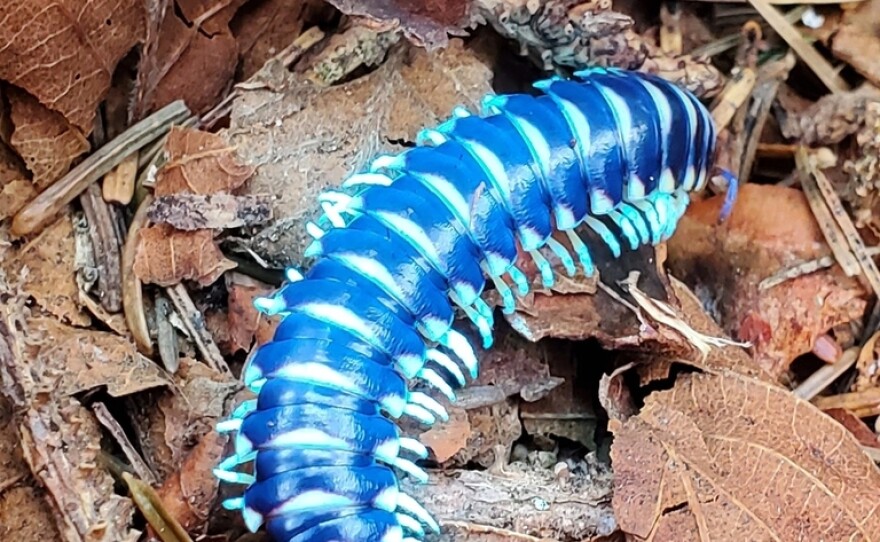
“We're up to over 22,000 species of everything that has been documented here in the Smokies,” Kuhn said. Over 1,000 of the species they’ve documented since 1998 are new to science entirely, but scientists estimate this number is just scratching the surface. “That is maybe a third to a quarter of the actual diversity here.”
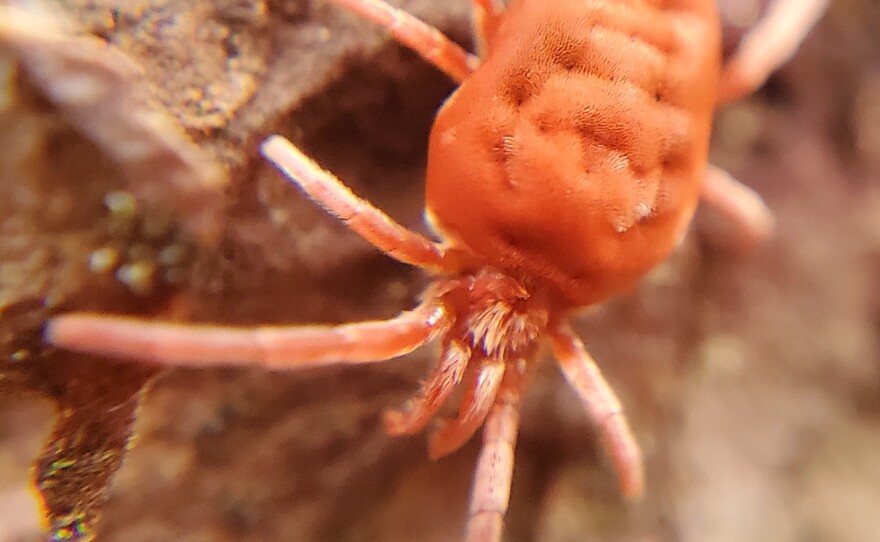
Finding a new species might seem like a rare joy, but it’s actually not rare at all. It happens constantly, Kuhn says. The larger, charismatic species are well documented, but the little ones — lichens, mites, fungi, mosses, rotifers (an extremely simple and tiny plankton-like creature that looks like a wheel) — all are, by this crew’s estimation, under-studied.


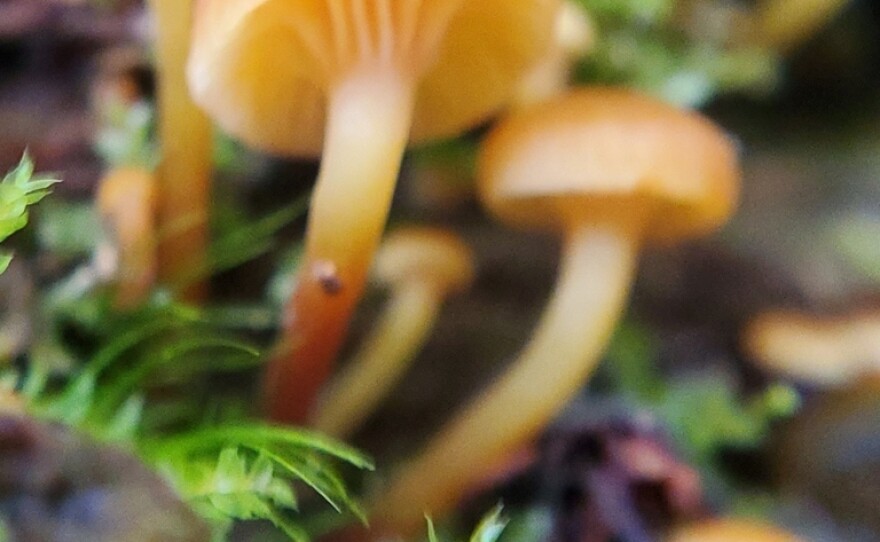
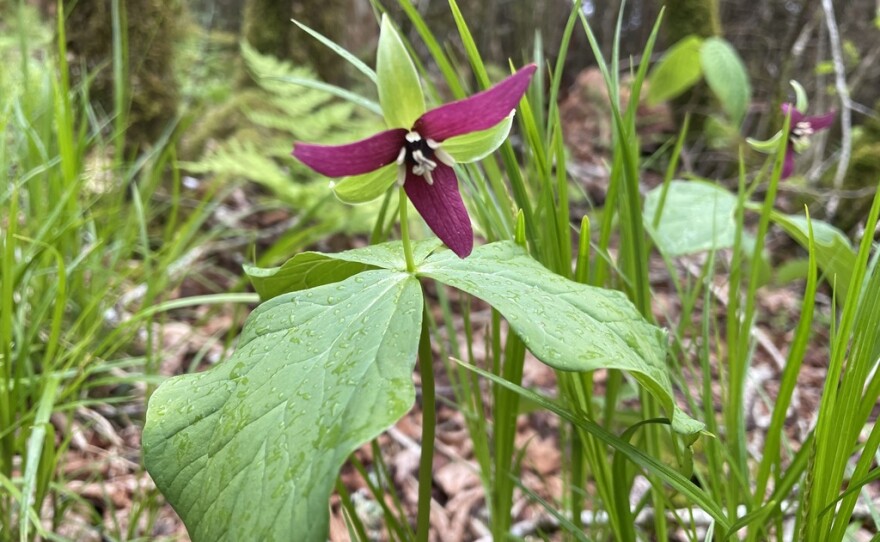
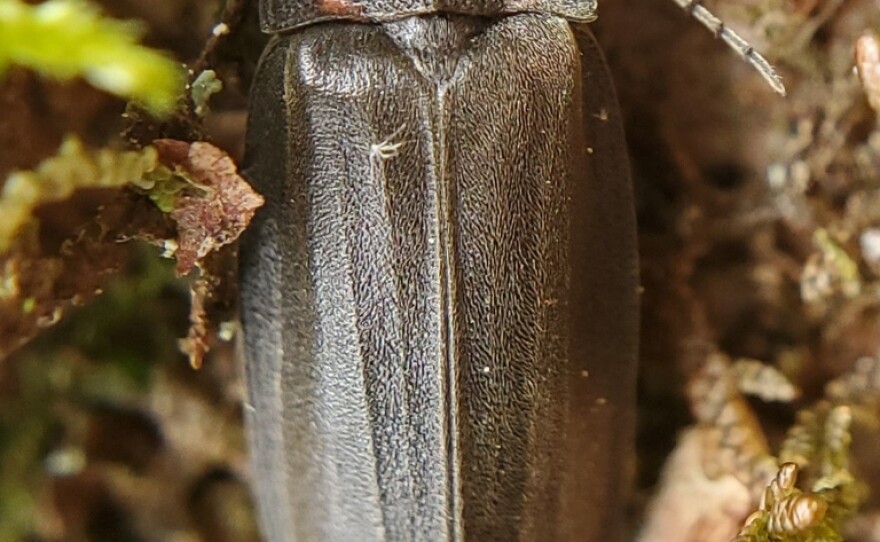
Researchers from academic institutions often come to collect data on spring or summer break, so less is known about species that are more active at other times of year. Also, many birds have a more transient relationship with the Smokies; they stop in the mountains as part of a longer journey, Kuhn said. Volunteers like the ones in GRISLD might be more likely to catch these ephemeral park inhabitants if they’re going out throughout the year.
Winter, fall and early spring are less well documented than the warmer months.
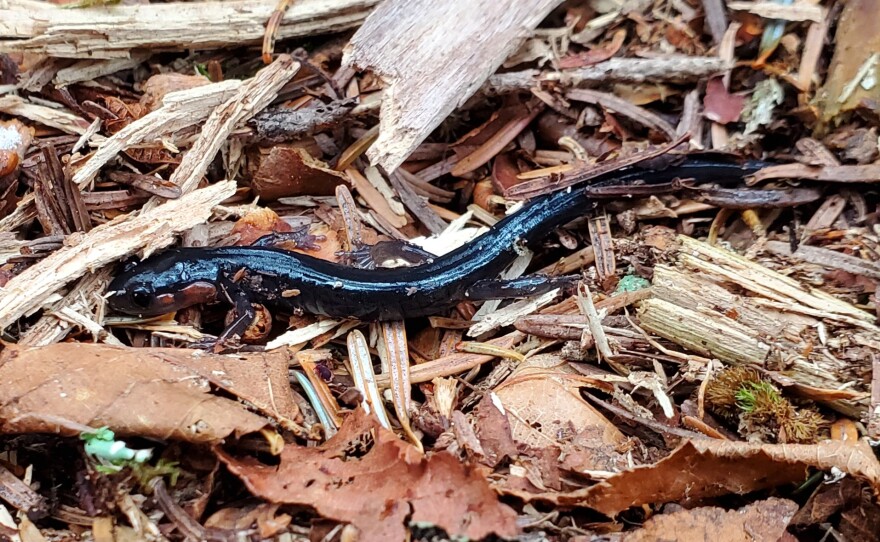
“The park's really known during that time of the year, but what about the things that are off-period?” Jason Hollinger said, turning over a log to watch a red-cheeked salamander scamper away.
The Park Service grants permits to researchers, because it doesn’t have the resources to do long-term, intensive climate monitoring itself. Its unique relationship with local nonprofits like Discover Life in America, as well as local governments that depend on the park for tourism revenue, allow it to coordinate with more researchers. The nonprofits also raise money in times of need. In one recent case, helping to keep the park open when salaries were on pause during the 2025 government shutdown,
“We can do things like take donations or fundraising, things like that. Ultimately we’re able to spend money on things that benefit the park but that a federal agency just can't do,” Kuhn said.
Another volunteer is Paul Super, a retired biologist who coordinated research in the park for over two decades. He’s interested in lichens, mosses, bugs and other small creatures in part because of the way they hold moisture, keeping the mountain cool and foggy. If they die off, the water cycle will change, too, he said.
“Regulating the moisture in these high elevation areas is pretty important because we're at the top of the watershed and everybody's drinking water is downhill from here,” Super said.
In his paid and unpaid time working for the park, he’s seen long-term changes. Many of the park’s elms and hemlocks have died off, Super said. The high elevation ecosystem, called spruce-fir forest, could be threatened by climate change because they’re “sky islands," isolated pockets of unique species that can’t survive further down the mountain. When the climate warms, there’s nowhere further up for some species to go. Some may disappear before we even know they’re there.
“The visitor coming here for a day or a week is not going to notice things and know that this is not what it used to be,” Super said.

For Laura Boggess, these data-gathering trips are critical as a way to monitor the changing climate from the ground up.
“The small ways, the paying attention, the naming of a species, which isn't a small thing, but it's like an accumulation of small, cooperative creation,” she said. “It is even more important as we enter into even more rapid change.”
Every square foot of the park contains so much life, it took the volunteer crew about two hours to go half a mile.
Even as they left the trail, they found something else — a rare parasitic fungus. The magnifying glass came out, and everyone slowly leaned in for a good look.

