© 2026 Blue Ridge Public Radio
Blue Ridge Mountains banner background
Your source for information and inspiration in Western North Carolina.
Play Live Radio
Next Up:
0:00
0:00
0:00 0:00
Available On Air Stations

Lawmakers Returned To Raleigh To Pass Nearly $1 Billion COVID Relief Bill

The Coronavirus Relief Act 3.0 provides checks for parents and funds personal protective equipment, increased internet connectivity and food banks.
Credit Jayron32
The Coronavirus Relief Act 3.0 provides checks for parents and funds personal protective equipment, increased internet connectivity and food banks.

The North Carolina legislature passed the Coronavirus Relief Act 3.0 Thursday, which allocates the nearly $1 billion left of federal CARES Act money. 

Host Frank Stasio gets the details about the latest coronavirus relief bill passed by the North Carolina legislature from WUNC Capitol Bureau Chief Jeff Tiberii.

One of the standout provisions would send $335 checks to all households in the state with someone 17 years old or younger to help parents who are at “their wit’s end,” according to Republican Senate leader Phil Berger. The bill now heads to the governor’s desk. Host Frank Stasio gets the details of the short legislative session with WUNC Capitol Bureau Chief Jeff Tiberii.

Tiberii also shares highlights from President Donald Trump and Vice President Mike Pence’s visits to North Carolina this week and analyzes the latest absentee ballot request data. As of Wednesday, more than 600,000 North Carolina voters requested absentee ballots, which is more than two and a half times the total number requested in 2016. The State Board of Elections begins mailing ballots today to voters who submitted requests.

Copyright 2020 North Carolina Public Radio
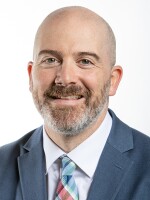
Jeff Tiberii first started posing questions to strangers after dinner at La Cantina Italiana, in Massachusetts, when he was two-years-old. Jeff grew up in Wayland, Ma., an avid fan of the Boston Celtics, and took summer vacations to Acadia National Park (ME) with his family. He graduated from the S.I. Newhouse School of Public Communications at Syracuse University with a degree in Broadcast Journalism, and moved to North Carolina in 2006. His experience with NPR member stations WAER (Syracuse), WFDD (Winston-Salem) and now WUNC, dates back 15 years.
Longtime NPR correspondent Frank Stasio was named permanent host of The State of Things in June 2006. A native of Buffalo, Frank has been in radio since the age of 19. He began his public radio career at WOI in Ames, Iowa, where he was a magazine show anchor and the station's News Director.
Amanda Magnus grew up in Maryland and went to high school in Baltimore. She became interested in radio after an elective course in the NYU journalism department. She got her start at Sirius XM Satellite Radio, but she knew public radio was for her when she interned at WNYC. She later moved to Madison, where she worked at Wisconsin Public Radio for six years. In her time there, she helped create an afternoon drive news magazine show, called Central Time. She also produced several series, including one on Native American life in Wisconsin. She spends her free time running, hiking, and roller skating. She also loves scary movies.